












Battery Technology Trends: The Race to a 10-Minute Charge
The Biggest Hurdle for EVs Isn’t Range Anymore—It’s Time
I remember my first real road trip in an electric car a few years back. Total disaster. Not because of range anxiety, either—we had plenty of miles to get where we were going. The real nightmare was the waiting. An hour stuck at a charger in some random parking lot feels like an eternity when all you want to do is get back on the road. Seriously.
You watch gas cars pull in, fill up in five minutes, and poof. They’re gone. And you’re still there, staring at a screen, calculating how long until you can escape.
That time gap. That’s the real hurdle.
For years, the entire conversation was about range. ‘How far can it go?’ But that’s not the main game anymore. Most new EVs have perfectly good range for 99% of what you do. The final boss for getting everyone into an electric car isn’t miles. It’s minutes.
This problem has kicked off one of the most exciting races in the tech world, driven by some amazing battery technology trends. This article is about the real lithium-ion battery innovation happening right now to kill that time gap. We’re going to dive into the tech that’s making EV fast charging a reality. We’ll look at things like 800V architecture and new battery chemistries that are changing the game. This is for the people looking into electric vehicle investment who want to spot the winners, but it’s also for anyone who just wants to buy an EV without planning their life around chargers.
Let’s Talk About Solid-State Batteries: Hype vs. Reality
You’ve probably heard the term whispered in tech articles or on car forums. Solid-state battery future. It sounds important. Official. It’s often treated like the one magic trick that will solve all of EV’s problems overnight. The holy grail.
So what even is it?
Think of a standard lithium-ion battery—the kind in your phone and in most EVs today—like a water balloon. It’s a pouch filled with a liquid (called an electrolyte) that electricity has to move through. A solid-state battery swaps that sloshy liquid for a thin, solid material. Like a slice of ceramic or glass.
The big deal here is safety and power. No flammable liquid means the risk of fire goes way, way down. A huge win for EV battery safety. Plus, because the solid part is so stable, you can cram more energy into the same space and probably charge it faster. This is the next-generation battery technology everyone is dreaming about.
But here’s the billion-dollar question: When can I get one?
The answer is… not anytime soon. I’ve seen so many splashy headlines, but the reality on the ground is way different. Making these things is really hard. It’s expensive. And getting them to last for thousands of recharges without cracking or failing? That’s the puzzle everyone is trying to solve. Even a giant like Toyota, which has been very public about its progress, has said it doesn’t expect to have them in mass-produced cars until maybe 2027 or 2028, and that’s an optimistic timeline according to their own announcements.
So for someone looking to buy a car in the next few years, or an investor looking for a return this decade, solid-state isn’t the story. It’s a long-term gamble. The real action, the stuff that’s actually improving your electric vehicle battery lifespan today, is happening with the batteries we already have.
The Real Game-Changer: Advanced Battery Management Systems (BMS)
Look, we’ve talked about the flashy future stuff. Solid-state gets all the headlines. But if you want to know what’s actually making a difference in the car you can buy today, we need to talk about the unsung hero of the battery world.
The Battery Management System, or BMS.
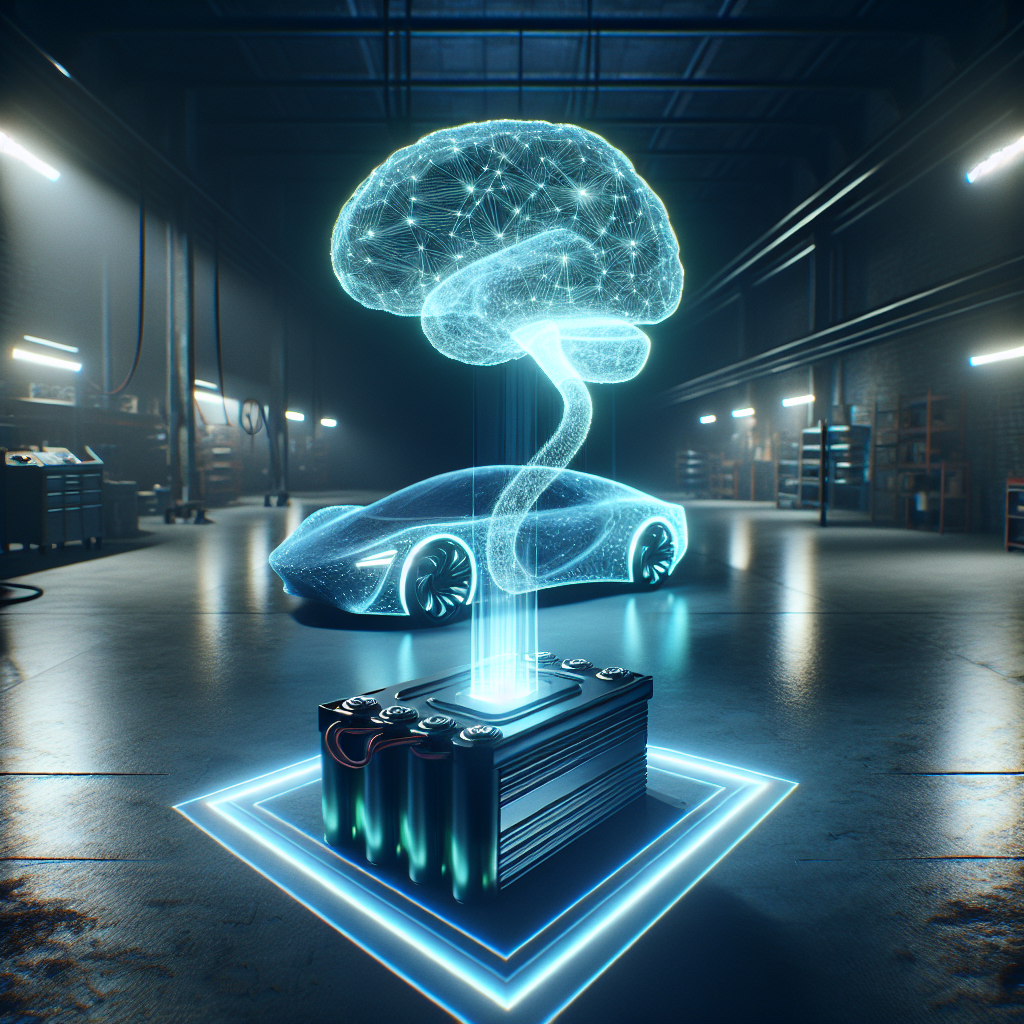
This might sound a little boring, but stick with me because this is huge. The BMS is the brain of the battery pack. Seriously. It’s a little computer that’s constantly watching over everything. It monitors the temperature, manages how fast it charges and discharges, and basically acts as a bodyguard for the most expensive part of your car.
Its main job is to keep all the little battery cells inside the big pack happy and working together. This balancing act is what prevents one part from wearing out faster than another, which is a major cause of EV battery degradation. A smarter BMS directly leads to a longer electric vehicle battery lifespan and dramatically improves EV battery safety by stopping problems like overheating before they can even start. It’s what stands between a healthy battery and a very expensive paperweight. Experts in the field point to this system as a key component for managing a battery by protecting it, monitoring it, and reporting data to keep the whole pack healthy.
And for anyone investing in battery tech, this is where a lot of the quiet innovation—and money—is going. The global market for these systems is expected to explode, growing from around $8 billion to over $60 billion in the next decade. That tells you everything about its importance.
This isn’t some stagnant technology, either. The next-generation battery technology isn’t just about chemistry; it’s about intelligence. Companies are now building BMS with AI to predict failures and even using wireless systems to make packs lighter and cheaper. It’s the brain getting a whole lot smarter, and that’s great news for all of us.
The Elephant in the Room: Let’s Talk EV Battery Safety
Okay, let’s just get it out there. The fire question. It’s the number one thing people ask me about, usually with a worried look on their face. You’ve seen the videos. A car on the side of the road, smoke pouring out. It looks terrifying, and it’s impossible to unsee.
So you’d probably assume EVs are little fireballs-on-wheels. Right?
But what if I told you the data shows the complete opposite? I mean, wildly the opposite. According to the Swedish Civil Contingencies Agency, a gasoline-powered car is about 19 times more likely to catch fire than an EV. Yes, really. 19 times more likely. Read that again. It’s just that EV fires are a much bigger story for the news because they’re new and different.
The real culprit, when it does happen, has a scary name: ‘thermal runaway.’ This is the main danger in current lithium-ion batteries. Think of it like a horrible set of dominoes inside the battery pack. If one tiny part of the battery gets damaged or just has a bad day and overheats, it can pass that heat to its neighbor. That one overheats, then passes its heat to the next one, and on and on. It’s a chain reaction that can, in rare cases, lead to a fire.
But here’s the good news. This isn’t a secret problem. Carmakers are obsessed with preventing this. Improving EV battery safety is one of the biggest battery technology trends there is, and they are throwing a ton of really smart engineering at it.
Here’s what’s happening in the car you can buy today:
* Advanced Cooling: Sophisticated liquid cooling systems are constantly working, like a little radiator for your battery, pulling heat away from the cells before it can build up.
* Armor Plating: The battery pack itself is usually housed in an incredibly strong, almost armor-like casing. Its job is to protect it from being punctured in a crash, which is a major cause of failure.
* The Smart Bodyguard: And remember that clever Battery Management System we just talked about? It’s the first line of defense. It can spot a single cell getting a little too warm and cut things off long before that domino effect can even start.
So while the solid-state battery future might get rid of this risk almost entirely, a href=”https://www.cars.com/”>the cars you see on the road today are already safer than most people think. For potential buyers, that should bring some serious peace of mind. And for people investing in battery tech, the companies that make these cooling systems and smart software are doing the critical work that makes the future of electric cars possible.
The Longevity Puzzle: What Does ‘EV Battery Lifespan’ Actually Mean?
This is probably the second biggest fear after the fire thing. People think an EV battery is like a lightbulb. One day it works perfectly, and the next day… poof. It’s dead. And you’re stuck with a multi-thousand dollar bill.
But that’s not how it works. At all.
An EV battery doesn’t just die. It degrades. It just gets tired over time. The technical term for this is “State of Health,” or SoH. Think of it as a grade for your battery. When it’s brand new, it has 100% State of Health. After a few years, it might be at 95%. This slow fade is the reality of EV battery degradation.
This is also why car companies don’t just warranty the battery against completely failing. They warranty it to hold a certain amount of its original charge—usually 70%—for a set period, like 8 years or 100,000 miles. They know it will degrade, and they’re telling you exactly what to expect. That 70% figure is the bottom floor.
So what actually causes this? What kills an electric vehicle battery lifespan?
For a while, I was pretty paranoid about this with my own car. I’ve had my EV for over three years now, put about 45,000 miles on it. I was almost afraid to look at the health screen. But last month, I checked it. The result? 94% of its original capacity remaining. After three years of commuting, road trips, and sitting in parking lots. It’s not the miles that matter as much as the cycles — how many times it’s been drained and refilled.
And from what I’ve learned, avoiding the worst of the degradation is pretty simple. It boils down to three things your battery really hates:
* Extreme Heat. This is public enemy number one. Leaving your car baking in the sun all day, every day is way worse than charging it a little weirdly. This is a huge area of focus for next-generation battery technology.
* Living at 100% or 0%. Your battery is most stressed when it’s totally full or totally empty. That’s why most EVs let you set a daily charging limit of 80% or 90%. Just save that full 100% charge for when you’re about to leave for a long road trip.
* Constant DC Fast Charging. Using a super-fast charger is totally fine for road trips. But using it for your daily commute puts a lot of strain on the system. Think of it like caffeine. A few espressos on a long drive is great. Five of them every single morning? Probably not a good long-term plan.
That’s basically it. The future of electric cars isn’t just about big breakthroughs; it’s about making today’s batteries last longer through smarter software and simple user habits. For anyone investing in battery tech, understanding this longevity puzzle is key. It’s about building trust.
Understanding the Core Battery Technology Trends Fueling This Revolution
Alright, we’ve gone through the fears and the frustrations. Now for the really cool part. The actual solutions. How in the world are companies getting an EV to charge in the time it takes to grab a coffee and use the restroom?
It’s not one magic trick. It’s a few big ideas all exploding at once. I like to think of it as better plumbing, better ingredients, and a much bigger brain. These are the core battery technology trends to watch.
First, the plumbing.
For years, just about every EV used what’s called a 400-volt system. It’s fine. It works. Think of it like a standard garden hose. But the massive change happening right now is the switch to 800V architecture. This isn’t just a small step up. It’s like ripping out that garden hose and hooking up a firefighter’s hose. The pressure is way higher, which means you can blast electricity into the battery at a speed that was just impossible before. This single change is a huge piece of the EV fast charging puzzle.
Of course, a fire hose is useless if you’re trying to fill a bucket through a tiny hole. You need to upgrade the bucket, too.
That leads us to the ingredients, or what scientists call new battery chemistries. The real breakthrough is happening deep inside the battery cell itself, in a part called the anode. For a long time, anodes were made from graphite. It’s reliable, but slow. The new kid on the block is silicon anode technology. Why the excitement? Silicon is like a super-sponge for lithium ions—the stuff that holds the energy. It can grab and hold way more ions than graphite. Even better, it absorbs them incredibly fast. It’s what allows the battery to actually accept the massive flow of power from an 800V system.

This is where raw lithium-ion battery innovation is happening.
But you can’t just throw all that power at the battery without some supervision. You’d have a disaster. That’s where the brain comes in—and we’re back to our unsung hero, the Battery Management System (BMS).
Think of it as the expert engineer sitting in the control room. It constantly watches the temperature and flow of energy. It safely pushes the battery right to its absolute limit, second by second, without letting it overheat or degrade. It’s the smart software that lets the powerful hardware do its job without blowing up.
For anyone looking at electric vehicle investment, the companies that are mastering this trio of 800V systems, silicon anodes, and predictive BMS software are the ones building the future. For the rest of us? This stuff is what will finally put an end to those painfully long waits at the charger. Thank goodness.
The Innovators: Who’s Actually Winning the Fast-Charging Race?
So all this new tech—the 800V systems, the silicon anodes—it’s awesome. But talk is cheap. Who is actually building this stuff? Who’s winning the EV fast charging race today?
It’s a mix of giants you’ve never heard of, scrappy startups, and the big names you already know. The latest battery technology trends are coming from all over.
First, you absolutely have to know about a company called CATL. They are the biggest battery maker on the planet, even if their name isn’t on the back of a car. They are the powerhouse behind the scenes. Their brand new CATL Shenxing battery is a total monster. The claim is wild: 400 km (that’s about 250 miles) of range from a single 10-minute charge. This isn’t a press release about a lab experiment. They are putting this battery in actual cars you can buy this year. This is the kind of lithium-ion battery innovation that forces every other carmaker to scramble and catch up.
But it’s not just the giants making the big moves.
There are some really exciting startups to watch, and for anyone interested in electric vehicle investment, this is where things get interesting. A company called StoreDot has become a name to watch. Their whole mission is incredibly simple and bold: “100-in-5.” That means 100 miles of range in just five minutes of charging. They aren’t trying to build a car. They want to be the ‘Intel Inside’ for EV batteries, using unique silicon anode technology to get those speeds. They’ve already got partnerships with major car companies, so they are not just dreaming. They’re making the tech that others will put in their cars.
And of course, you can’t have this conversation without talking about Tesla. Funny enough, their edge isn’t just from having the most radical new battery chemistries. It’s something different. It’s about the whole picture. They designed the car, the battery pack (like their special 4680 cells), and the Supercharger network to all work together perfectly. When you pull up to a Supercharger, the car already knows what to do, the plug just fits, and the payment is automatic. That seamless experience is their real-world advantage. It’s not just about one piece of hardware, it’s about making the whole process of finding a fast charger and using it completely painless. Something no one else has quite nailed yet.
The Trade-Offs: The Hidden Costs of Living Life in the Fast Lane
A 250-mile charge in just 10 minutes sounds like the dream, right? It feels like the final puzzle piece just clicked into place. But here’s the deal… there’s no free lunch. Ever. Especially in physics.
Pushing that much energy into a battery that fast creates a ton of heat. A ton of it. And heat is公 enemy number one for a battery’s health. It’s the single biggest cause of EV battery degradation. This is why the debate around EV fast charging gets so heated, literally. Using an ultra-fast charger every single day will wear down your battery faster than just plugging it into a regular, slower charger at home overnight. It just will. For now, that’s a fact of life. It’s a trade-off: crazy convenience today versus a slightly shorter overall lifespan for your battery pack down the road.
But car companies know this. Their engineers are obsessed with it.
To handle all that heat, they build incredibly complicated cooling systems. We’re talking liquid cooling channels snaking through the battery pack, advanced heat sinks, and powerful software making sure nothing gets too hot. This stuff is some of the most interesting work in current battery technology trends. But all that extra engineering adds weight to the car, it adds complexity, and boy does it add cost. That’s part of the hidden price tag of getting those mind-blowing charging speeds.
And the problem gets even bigger when you zoom out from just one car. Think about a busy highway rest stop on a holiday weekend. Now imagine ten cars all plugging in at once, each trying to pull down a massive amount of power. We could be talking about enough electricity to power a small town being drawn from that one spot. Instantly. The strain on the local electrical grid is immense. This is a huge, huge challenge. Upgrading our infrastructure to handle this kind of demand is no small task, and it’s one of the biggest hurdles that companies and investors are tackling right now. For anyone interested in electric vehicle investment, solving this grid problem is probably one of the biggest opportunities of the next decade.
The Investor’s Perspective: Where Is the Smart Money Going?
Okay, so you see all this wild new tech. Your head is probably spinning with talk about 800-volt systems and silicon anodes. It’s a lot.
For anyone looking at electric vehicle investment, the big question is simple. Where do you even put your money in all this?
It’s not just about betting on one car company. Not at all. The smartest folks I talk to are looking at the whole chain. Think about it. That silicon anode technology we talked about? Someone has to mine and process all that raw silicon. Same goes for the advanced cooling systems needed to handle EV fast charging—the companies building those specialized parts are flying, even if you’ve never heard of them. These are some of the most overlooked battery technology trends.
Then you have the big gamble.
The home run swing. The all-or-nothing bet on solid-state batteries. This is where you hear names like QuantumScape and Solid Power. I’m not a financial advisor, so do your own homework, but these guys are trying to build the absolute endgame for batteries. It’s a huge risk. They might fail. But if one of them cracks the code and makes a mass-market solid-state battery? The payoff could be enormous. It’s what you call a high-risk, high-reward play.
But maybe you’re not a gambler. I totally get it. There’s another way to play this. It’s the classic “picks and shovels” strategy. During the gold rush, more people got rich selling tools to miners than by actually finding gold. The same thing is happening now. The companies building the charging stations, managing the software that runs them, and sorting out the payment systems are the modern-day pickaxe sellers. It might not be as sexy as inventing a brand new battery chemistry, but it’s a massive business opportunity as millions of EVs hit the road. It’s the boring, essential stuff that actually makes the whole revolution work.
What This All Means for You, the EV Buyer
Okay, enough geeking out on the tech. Silicon anodes, 800V systems… what does all this actually mean for you, the person who just wants to buy a car and not spend an hour at a charger?
Here’s the deal. All these wild battery technology trends aren’t just lab experiments anymore. They’re here. Right now. You can walk into a dealership today and buy a regular, non-luxury EV that can genuinely add close to 200 miles of range in about 15-20 minutes. Cars like the Hyundai Ioniq 5 or the Kia EV6 are perfect examples of this in action. The painful waits are becoming a thing of the past for a lot of new models.
But here’s a secret that the salesperson might not tell you. To get those crazy speeds every time, you have to do one simple thing: precondition the battery. Think of it like a warm-up before a workout. Just tell the car’s navigation you’re heading to a specific fast charger. The car then does its magic, automatically warming up the battery on the way there. Arriving with a cold battery is like trying to pour water into a frozen bottle—it just won’t work well. Preconditioning can literally cut your charging time in half. It’s the single biggest trick to getting the best EV fast charging experience.
So what about that amazing 10-minute charge we talked about?
It’s coming. Fast. For now, it’s the headlining feature of cars using things like the CATL Shenxing battery. But it’ll probably become a more common, mainstream thing you can expect in your average EV around 2026 or 2027. It’s not science fiction anymore, but we’re not quite living in that world today for every car on the lot.
So my advice is simple. If charging speed is your absolute number one headache you want to solve, ignore the marketing noise. Just ask one question: Does it have 800V architecture? For now, that’s the clearest sign that a car is built for life in the fast lane.
The Future is Charged and It’s Arriving Ahead of Schedule
So where does all this leave us?
We’ve covered a ton of ground. From solid-state dreams to the real-world grit of battery management systems. The race to kill charging time is easily the most important of all the current battery technology trends. It’s not just one company in a lab; it’s a global sprint being run by chemists, engineers, and software wizards all at once.
For anyone looking at electric vehicle investment, the landscape is scattered with shiny objects. It’s complex. But it’s also packed with opportunity. For the rest of us, the regular people just wanting to buy a car, it means the single biggest compromise of going electric is quickly fading into the rearview mirror. No more life planning around chargers.
The next time you find yourself waiting for that battery percentage to tick up, just remember that thousands of incredibly smart people are working like crazy to make that wait shorter. And shorter.
That five-minute EV ‘fill-up’ isn’t a question of ‘if’ anymore. Honestly. It’s just a question of ‘when’. And ‘when’ is coming a lot faster than you think.