Beyond the Hype: Is Now the Time to Bet on Solid-State?
Let’s be honest. For years, “solid-state battery” felt like a mirage in the venture capital desert. The holy grail. Always just over the next dune. The road from a cool lab result to actual production is littered with the ghosts of failed attempts. I’ve been watching this space for a long, long time, and I’ve seen plenty of hype cycles.
But something feels different this time.
The signals are finally getting interesting. Yes, the hype is louder than ever. But underneath it, serious money from serious people is moving, and the first whispers of real, manufacturable progress are starting to leak out of the labs.
And this isn’t just a story about creating the future of EV batteries. That’s the easy headline that gets all the clicks. This is about a fundamental rewrite of energy storage itself, a shift that impacts everything from the phone in your pocket to massive grid-scale solutions. The opportunity in automotive battery innovation is massive, but the total prize is astronomical.
So this guide isn’t for the casual observer. It’s for the people with skin in the game: the VCs looking for the signal in the noise and trying to make smart bets on investing in battery startups. And it’s for the founders navigating this brutally capital-intensive maze. We’re going to cut through the marketing fluff and get to the core of it—the solid-state battery technology, the key players, and the brutal solid-state battery challenges that will separate the unicorns from the science projects.
Why Everyone in Tech is Suddenly Obsessed with Solid-State Batteries
Okay. We’ve gone deep in this guide. We’ve talked electrolytes, dendrites, and the brutal reality of manufacturing. It’s a lot, I know. It’s easy to get lost in the details and forget the big picture.
So let’s pull up for a second.
I’ve been in venture capital energy tech for a long time, and the buzz this time just feels different. It’s not the usual fluffy hype cycle. This is a reaction to a hard, physical wall. We’ve hit the performance plateau with traditional lithium-ion alternatives. They are the bottleneck. Holding back everything from cheaper EVs to medical devices. This isn’t just a trend; it’s a dam about to break.
And the reason everyone is pushing so hard is because what’s on the other side isn’t just a slightly better battery. Solid-state isn’t a 10% improvement. It’s the holy grail. We’re talking about a step-change. A complete rewrite of the rules for energy storage. The promise of insane energy density for longer range, true safety without flammable liquids, and charging speeds that actually fit into a normal person’s life. That’s the prize everyone from EV battery startups to major automakers is chasing.
Look, the science is cool. Really cool. But this guide was never meant to be a high-school chemistry lesson. It’s a strategic map for anyone navigating the wild world of next-gen battery technology. It’s for the investors and founders who need to see the field clearly. To spot the real players and, more importantly, dodge the hype traps and the science projects that will never leave the lab. The battery technology investment trends are clear, but the path for any single company is anything but. Understanding the difference between a cool demo and a scalable business is where the real money in solid-state battery investment will be made.
The Key Players: A Map of the Solid-State Landscape
Okay, so who’s actually building these things?
It’s not just a couple of companies in a garage. The field is crowded. And a little chaotic, if I’m being honest. You have university spin-offs running on brilliant ideas and grant money, giant automakers creating joint ventures, and a bunch of stealth-mode solid-state battery startups that are keeping their cards close to their chests.
Then you have the ones everyone talks about: QuantumScape and Solid Power. These are the big public players getting all the media attention. Think of them as the early trailblazers out on the frontier. QuantumScape has that massive partnership with Volkswagen, and Solid Power is backed by Ford and BMW. They’re taking on the whole challenge—trying to build the entire battery cell from the ground up. The pressure on them is immense.
The whole QuantumScape vs Solid Power debate is a big one. People are constantly trying to figure out which horse to back. This video gives a pretty good breakdown of their different approaches:
https://www.youtube.com/watch?v=RzssYp32_6M
But here’s the thing… focusing only on those two misses the bigger picture. The real action is in the sprawling ecosystem of private next-generation battery companies working on specific pieces of the puzzle.
This is where smart solid-state battery investment gets really interesting. It’s not a single race. It’s more like a decathlon with different events. Some are focused only on the electrolyte, others are tackling the anode, and some are just trying to figure out how to build this stuff at scale. A ton of innovators like Factorial Energy, ProLogium, and Sakuu are all coming at this from different angles, using different materials and manufacturing ideas.
Here’s a simple way to look at the players:
| Player Type | Who They Are | Their Goal |
|—|—|—|
| The Public Pioneers | QuantumScape, Solid Power | Build the whole battery and be the first to market at scale. |
| The Component Innovators | Dozens of private startups | Perfect one single piece, like a better electrolyte or anode. |
| The Manufacturing Gurus| Companies like Sakuu | Figure out new ways to print or produce batteries cheaply. |
For anyone looking at investing in energy storage, this is great news. It means you don’t have to pick the one winner. You can find opportunities all across the board. And for founders? It means there are still huge, valuable problems left to solve. You don’t need to build the whole engine; sometimes, building a better, safer spark plug is the company that changes everything.
The Problem We’re Solving: The Crippling Limits of Lithium-Ion
So we’ve met the players in this big new game. But let’s rewind for a second. Why is everyone betting so much on solid-state battery investment? What’s actually wrong with the lithium-ion batteries we use in literally everything?
First, we’ve pretty much hit a wall on power.
Think of a lithium-ion battery like a suitcase you’ve been packing for 30 years. At first, you found clever ways to fold things to fit more in. But now? It’s completely full. You might be able to squeeze one more sock in, but you’re not fitting another coat. That’s where we are with EV battery innovation. We’re getting tiny, tiny improvements, but we’ve stopped seeing those big jumps in how much energy we can store.
And then there’s the safety issue. It’s a real one.
The liquid inside most batteries today is flammable. We’ve all seen the scary headlines about phones or hoverboards or cars catching fire. Look, it’s rare, but the risk is baked right into the chemistry. This is a huge problem that solid electrolyte technology just… deletes. By swapping that soupy liquid for a solid material, you get rid of the part that can catch fire. Simple as that. It’s a massive win for safety.
Finally, there’s the trade-off between charging fast and making the battery last. You can jam power into a current battery pretty quickly, sure. But doing that all the time damages it. It’s like trying to drink a whole gallon of water through a tiny straw in 60 seconds. It makes a mess and breaks the straw over time. Fast charging degrades today’s batteries, meaning they hold less and less charge over their life. We need something that can handle a quick 15-minute charge day-in and day-out without falling apart.
So these aren’t just small things to fix. They are fundamental limits holding back entire industries. It’s why the battery tech funding is pouring in. The first of the solid-state battery startups to truly solve these problems won’t just build a better battery. They’ll basically change the rules of the game for everyone.
Solid-State 101: What Are We Actually Investing In?
Alright, let’s get down to basics. We’ve talked about the funding and the players, but what is this stuff, really? What are we buying when we make a solid-state battery investment?
It’s less complicated than it sounds.
The core idea is simple. Your current phone or EV battery has a kind of soupy, flammable liquid inside that lets electricity move around. It’s called a liquid electrolyte.
A solid-state battery gets rid of it. The entire thing. It replaces that slushy liquid with a super-thin, solid piece of material. It could be a type of ceramic or a flexible polymer.
Think of it like this: you’re swapping a water balloon for a solid billiard ball.
One is squishy, can leak, and is a bit unstable. The other is dense, sturdy, and packs a lot more punch in the same space. That’s the fundamental leap in solid electrolyte technology.
So why is that such a game-changer? It unlocks a trifecta of benefits that VCs and engineers have been chasing for years.
1. Way More Safety. This one’s easy. No flammable liquid means the risk of fire goes way, way down. It basically deletes the most dangerous part of a lithium-ion battery.
2. More Juice (Energy Density). Because the solid material is more compact and stable than the liquid, you can pack things tighter. You can use more powerful materials for the anode, like pure lithium metal, which is a huge no-go in liquid batteries. This is how you get an EV with a 600-mile range. More density equals more range. It’s a huge step in EV battery innovation.
3. Super-Fast Charging. Ions can move through some of these solid materials incredibly quickly and safely. That means you could potentially charge a battery to 80% in 15 minutes… without degrading the battery’s health over time. No more waiting 45 minutes at a charging station.
But here’s a pro-tip, and it’s where the real homework comes in. Not all “solid-state” is the same. There are different approaches—different “flavors” of electrolytes that the next-generation battery companies are working on. The main ones are sulfides, oxides, and polymers. Each has its own army of startups backing it, and each has its own unique set of strengths and brutal challenges. Understanding which path a startup has chosen is key to figuring out the real risks and rewards.
The Three Big Roadblocks: It’s Harder Than It Looks
So, swapping a sloshy liquid for a solid sounds simple, right? A straightforward upgrade.
Not so fast.
If it were that easy, we’d all have 600-mile range EVs by now. Turns out, there are some brutally hard problems that solid-state battery startups are trying to solve. These are the big bosses at the end of the video game.
First, there’s the electrolyte itself. This solid separator has to do two opposite things perfectly. It needs to be a perfect wall to keep the positive and negative ends from touching and shorting out. But it also has to be a superhighway for lithium ions to pass through at lightning speed. It’s a huge challenge in solid electrolyte technology. Think of it like a bouncer at a club who has to keep everyone out… except for one specific person they’ve never met.
Then there’s the dendrite problem. This one is a real nightmare. To get that amazing energy density, many companies want to use a pure lithium metal anode. But lithium can grow tiny, sharp, needle-like whiskers called dendrites as the battery charges. These can poke right through the solid separator, short-circuit the cell, and kill the battery. Or worse.

Finally, there’s manufacturing. This is the valley of death for many next-generation battery companies. Making a single, perfect little battery in a lab is one thing. Making millions of them a year for cars, flawlessly and cheaply? That’s an entirely different universe of difficulty.
So why bother? Why are the smartest people and biggest investors tackling these insane challenges? Because the prize is gigantic. The market is projected to grow from about $616 million to over $3.5 billion by 2030. For that kind of return, people will try to solve just about anything.
The Real Final Boss: Can We Even Build These Things?
So we’ve talked about dendrites and picky electrolytes. Tough problems. But the real monster, the one that keeps CEOs of EV battery startups up at night, is manufacturing.
This is the billion-dollar question. Literally.
It’s where most amazing lab breakthroughs go to die. Here’s the brutal truth: you can have the most perfect, high-performance battery cell in the world, but if you can’t make millions of them cheaply and reliably, you have a science project, not a business.
And here’s the catch. We’ve spent billions building massive Gigafactories for current lithium-ion batteries. Many of the new solid-state chemistries, especially those using ceramics, can’t be built in those factories. They need totally new, crazy-expensive equipment and processes. We’re talking high-temperature ovens and precision machinery that doesn’t exist at scale yet. For an investor, that’s a terrifying capital expense.
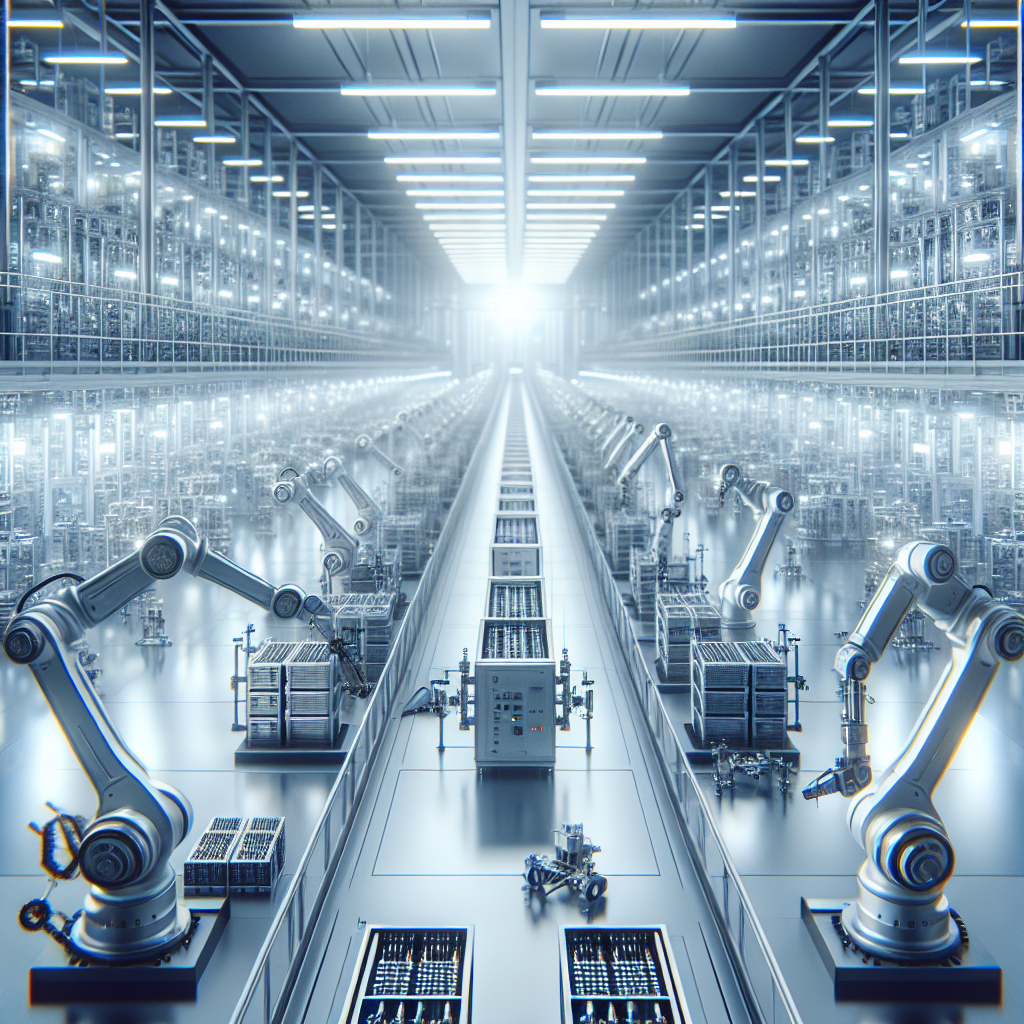
This is why the smartest VCs are obsessed with a different question: Is it a “drop-in” solution?
Can the startup’s technology use the existing lithium-ion manufacturing lines? Because if it can, the cost and risk plummet. This is a huge driver of solid-state battery investment right now.
Companies like Factorial Energy have built their entire strategy around this. A big reason they’ve pulled in so much funding is their claim to work with existing machinery. It’s a genius move. They’re telling investors, “You don’t have to build a whole new world with us. Just a better part for the one you already have.”
When you’re looking at next-gen battery technology, forget the physics for a second. Ask about the manufacturing roadmap. If they don’t have a killer answer, walk away.
The Landscape: Mapping the Key Players in the SSB Race
So let’s get into the nitty-gritty. When we talk about solid-state battery investment, you can’t just paint with a broad brush. It’s not one big race. Like I said, it’s more like a decathlon. To make smart bets, you have to know which event you’re watching.
Everyone thinks this is just a classic Silicon Valley story. A few scrappy solid-state battery startups in a garage taking on the world. It’s not.
Major players like Toyota, Samsung, and Volkswagen are pouring billions into their own R&D. They’re both partners and competitors to the startups, creating this messy, fascinating ecosystem.
As a VC, I have to simplify the chaos. Here’s how I do it. I ignore the marketing and look at the core chemistry. Almost every single one of these companies falls into one of three buckets based on their electrolyte material.
This is the secret decoder ring.
The Three Flavors of Solid-State
If you want to understand next-gen battery technology, you need to understand the fundamental trade-offs. Each of these materials has a superpower. And a fatal flaw.
1. Oxides (The Ceramic Plate)
This is the world of QuantumScape. The big idea here is to use a hard, ceramic-like material as the electrolyte. It’s super stable and doesn’t react with other parts of the battery, which is great. It’s basically a solid wall that lithium ions can pass through.
The problem? It’s brittle. Think about it. You’re trying to make a super-thin sheet of ceramic, stack it perfectly millions of times, and put it in a car that vibrates. It’s an insane manufacturing challenge. That’s why the QuantumScape vs Solid Power debate is so intense—they represent two very different philosophies.
2. Sulfides (The Fast Superhighway)
This is Solid Power’s home turf. Sulfides are awesome because they let lithium ions move through them really, really fast. This is key for fast charging. They are also less brittle than oxides, making them a bit easier to work with.
But here’s the catch. They are incredibly sensitive to air and moisture. That means you need a perfectly dry, controlled environment to manufacture them, which adds cost and complexity. It’s a huge headache they’re trying to engineer their way around.
3. Polymers (The Flexible Friend)
And this brings us to players like Factorial Energy. Polymers are basically a kind of flexible plastic. The immediate win is manufacturing. Because they are more flexible and stable in normal air, you can use (or slightly adapt) existing lithium-ion battery factories. That’s the “drop-in” magic we talked about.
The historical problem with polymers was performance. They only worked well when they were hot, which is a non-starter for most products. But newer polymer batteries are getting much better at working at room temperature. The promise of using existing factories is a big reason why Factorial Energy funding has been so successful, attracting big auto partners.
Here’s a quick cheat sheet:
| Electrolyte | The Pro | The Con | Key Players | Big Backers |
|—|—|—|—|—|
| Oxides | Super stable | Brittle, hard to make | QuantumScape | Volkswagen |
| Sulfides | Ions move super fast | Sensitive to air/moisture | Solid Power | Ford, BMW |
| Polymers | “Drop-in” manufacturing | Can need heat to work well | Factorial Energy | Hyundai, Mercedes |
When you see a new startup announce a breakthrough, find out which of these three paths they’re on. It will tell you almost everything you need to know about the secret battles they’ll be fighting for the next five years.
The 101: Why Solid-State Is a Game Changer (In Theory)
Okay, let’s get on the same page for a second. It’s easy to get lost in the weeds with all the different company names and chemistries. Before we go any further, let’s boil it all down to the absolute basics.
What are we talking about here?
Think about the battery in your phone or an EV right now. Inside, there’s a kind of soupy, flammable liquid called an electrolyte. It’s the highway for electricity. It works. But it has limits. It can catch fire. And you can only stuff so much energy into it before things get weird.
Solid-state battery technology gets rid of that liquid entirely. It swaps the soup for a solid, ultra-thin wafer of material—maybe a ceramic, maybe a polymer. That’s it. That’s the core idea.
This simple swap is why everyone is losing their minds. In theory, it unlocks three promises that border on magical. These aren’t small tweaks. They represent a total rewrite of what batteries can do.
1. Insane Energy Density. Because the solid layer is more stable and compact, you can use way more powerful materials. This is the holy grail for the future of EV batteries. We’re talking about packing so much more power into the same space that you could get an electric car with an 800-mile range. Or a phone that lasts for five days. You get the idea.
2. True Safety. This one is simple. No flammable liquid means the risk of fire plummets. It’s a huge deal. It turns batteries from something we have to carefully manage into something inherently stable.
3. Coffee-Break Charging Speeds. The new solid highways can let ions move crazy fast. This means you could potentially charge an EV in 15 minutes. Not just once in a while, but every single day without destroying the battery’s lifespan. This alone would transform automotive battery innovation.
So when we talk about investing in battery startups, this is the prize. We’re not chasing a 10% better battery. We’re funding a hunt for a completely different kind of energy storage. One that unlocks new products and possibilities we haven’t even thought of yet. That’s why the stakes are so ridiculously high.
The Landscape: Who’s Actually in the Race?
So we’ve talked about the science. The different flavors of batteries. The big, scary problems.
But let’s talk about the people. Who is actually building this stuff? If you’re a founder looking for a lane or a VC trying to place a bet, you have to know the map of the battlefield.
And it is a battlefield. It’s not just a cute Silicon Valley story with a few scrappy solid-state battery startups in a garage. This is a heavyweight fight with three distinct types of contenders.
1. The 800-Pound Gorillas
First, you have the giants. The incumbents. Think Toyota, Samsung, and the big battery makers like CATL. These companies have been working on this stuff quietly for years. Decades, even. They have endless R&D budgets and have been building up huge walls of patents. For a founder, this is both terrifying and great.
It’s great because their massive investment in solid-state battery technology proves this isn’t a fantasy. It validates the entire market. But it’s terrifying because their legal teams and massive manufacturing power can crush a small startup without even noticing.
2. The Public Bellwethers
Next, you have the ones everyone watches on the stock market. These are your QuantumScapes and Solid Powers. They’re the public faces of the solid-state dream, backed by huge automakers like Volkswagen, Ford, and BMW. They are the bellwethers. When they have a good quarter, the whole industry feels a boost. When they stumble, everyone panics.
These companies are under a microscope. They have to hit their milestones in public, and the pressure is immense. They are a great indicator of how the technology is progressing, but they don’t represent the whole story. The QuantumScape vs Solid Power rivalry gets a lot of headlines, but it’s just one part of a much bigger drama.
3. The Stealthy Wildcards
And this is where it gets really interesting for anyone investing in battery startups. This is the world of the early-stage, often stealthy companies. Many of them are spin-outs from university labs, built around a single, brilliant idea for a new material or a clever manufacturing trick.
This is the high-risk, high-reward zone. Absolute chaos. 9 out of 10 might fail. They might run out of money or hit a scientific wall they can’t get past. But that one that makes it? That’s the company that could leapfrog everyone else. For founders, this is your chance to be nimble and solve a problem the giants haven’t even seen yet. For VCs, this is where you go hunting for unicorns.
The Elephant in the Lab: The Real Tech Hurdles Startups Are Facing
Okay. We’ve talked about the different recipes. Oxides, sulfides, polymers. It all sounds very promising. So why aren’t our phones lasting for a week straight already?
Because the theory is the easy part. The real work is brutally hard.
Any founder pitching me on their solid-state battery technology better have a killer answer for three specific problems. These aren’t just minor roadblocks. They are mountains. And most solid-state battery startups die trying to climb them.
First, you’ve got the classic villain of this story: dendrites.
It’s a scary-sounding word for a simple, nasty problem. To get that crazy energy density, a lot of these designs use pure lithium metal. But when you charge the battery, that lithium can grow tiny, sharp, metal whiskers. Needles. They grow right through the solid electrolyte, touch the other side, and BAM. The battery shorts out. It’s dead. It’s a fundamental materials science challenge that has stumped brilliant people for years.
But honestly? That’s not even the problem that keeps me up at night.
The real killer, the one that separates the science projects from real companies, is manufacturing.
You have no idea how many times I’ve seen a perfect little battery in a lab. A tiny coin cell that has amazing performance. It’s wonderful. It’s also useless. Because if you can’t make millions of big car-sized batteries out of that same material, you don’t have a business. The machinery to build some of these new batteries, especially the ceramic ones, doesn’t even exist at scale yet. We’re talking about inventing a whole new way to build things, which costs billions. This is the biggest of all the solid-state battery challenges and a huge red flag for investing in battery startups.
And let’s say you solve the dendrites. Let’s say you invent a whole new way to manufacture at scale. There’s another beast waiting for you.
The supply chain.
Where do you get your magic powder from? Some of the best materials for these new batteries are incredibly rare or wildly expensive. Or worse, the supply is controlled by just one or two countries. This isn’t just a cost issue; it’s a huge geopolitical risk. If your entire business model depends on a rare type of ceramic or sulfide that doubles in price overnight, you’re toast. Your shiny automotive battery innovation is dead in the water.
So yeah. It’s tough out there. The future of EV batteries won’t be built by simply having a good idea. It’ll be built by the teams who can solve these three monster problems at the same time.
The Investment Thesis: Where Is the Smart Money Going?
So this is the big question, right? For founders and VCs alike. Where is the actual money flowing in this chaos? And more importantly, what’s the logic behind the checks being written?
Look, five years ago, investing in battery startups was all about the science. It was pure tech risk. VCs were placing bets on which brilliant PhD had the best new chemistry in a petri dish. Energy density was the only number that mattered.
That game is over.
Now, the conversation has completely changed. When a founder comes into my office, I spend maybe 10 minutes on their chemistry and 50 minutes on their manufacturing plan. The new litmus test is simple: how are you going to build this? Can you use existing factory lines? If the answer involves building a billion-dollar factory from scratch with machines that haven’t been invented yet… the meeting ends pretty quickly. The investment thesis has shifted from chemistry to process.
The other big shift? The type of money coming in.
Early seed rounds are still the domain of traditional VC. But the later, bigger rounds are being dominated by the corporate VCs (CVCs). The venture arms of Volkswagen, Hyundai, Mercedes, Ford. You name it. And this isn’t just about cash. Frankly, the cash is the least interesting part. These CVCs are bringing manufacturing expertise and, most importantly, offtake agreements. They’re basically saying, “If you can build it, we will buy it.” That piece of paper is a golden ticket. It de-risks the entire business model in a way a traditional VC fund never could. The latest VC funding for battery tech shows this trend clearly.

So what does that mean for where you should look?
It means the field is still wide open. Don’t believe anyone who says one chemistry has already won. The smart money isn’t making one big bet; it’s diversifying. We’re seeing huge investments from auto OEMs go into sulfide companies like Solid Power because they want that top-tier performance for their flagship EVs. At the same time, lots of money is flowing into polymer and oxide companies like Factorial and QuantumScape because their path to cheaper, more stable manufacturing might be more straightforward. The energy storage investment trends aren’t pointing to a single winner. They’re pointing to a portfolio of solutions for different parts of the market.
The Final Word: Patience is a Virtue, But Speed is a Necessity
So where does this leave us, after swimming through all this chemistry and chaos?
The takeaway is pretty clear to me. This solid-state future is coming. It’s real. But it won’t be like flipping a light switch. Not at all.
It’s going to be a slow rollout. A gradual phase-in. Don’t expect your affordable family EV to have one next year. I’d bet we see these first in really high-end, niche products. Think specialized drones, some medical devices, or maybe a $200,000 electric supercar. Places where cost isn’t the number one problem. From there, it’ll slowly work its way down to the mass market. That’s how these big tech shifts always seem to go.
For any VCs reading this, my advice is simple. The game has changed. Back the teams who are just as obsessed with their factory layout and supply chain map as they are with their secret electrolyte formula. The brilliant scientist is great, but you need a ruthless operator to actually get across the finish line.
And for the founders of these solid-state battery startups? Your only job now is proving you can scale. Hit those de-risking milestones. Show you can make more than just a handful of perfect little cells in a lab.
The next 24 months are going to be everything. The real news won’t be another splashy funding announcement—forget those for a minute. The real signal will be a quiet press release about pilot production yields. Or a report from an independent lab that validates a company’s claims about cycle life.
That’s the stuff that will show who is actually breaking away from the pack. That’s the real test.
It’s a strange race. You need the patience of a marathon runner to survive the long, painful R&D slog. But you also need the speed of a sprinter to hit those manufacturing goals before the money runs out. A brutal combination.
Leave a Reply